How Naming Your Trust Wrong Can Cost You Thousands in NSW Stamp Duty
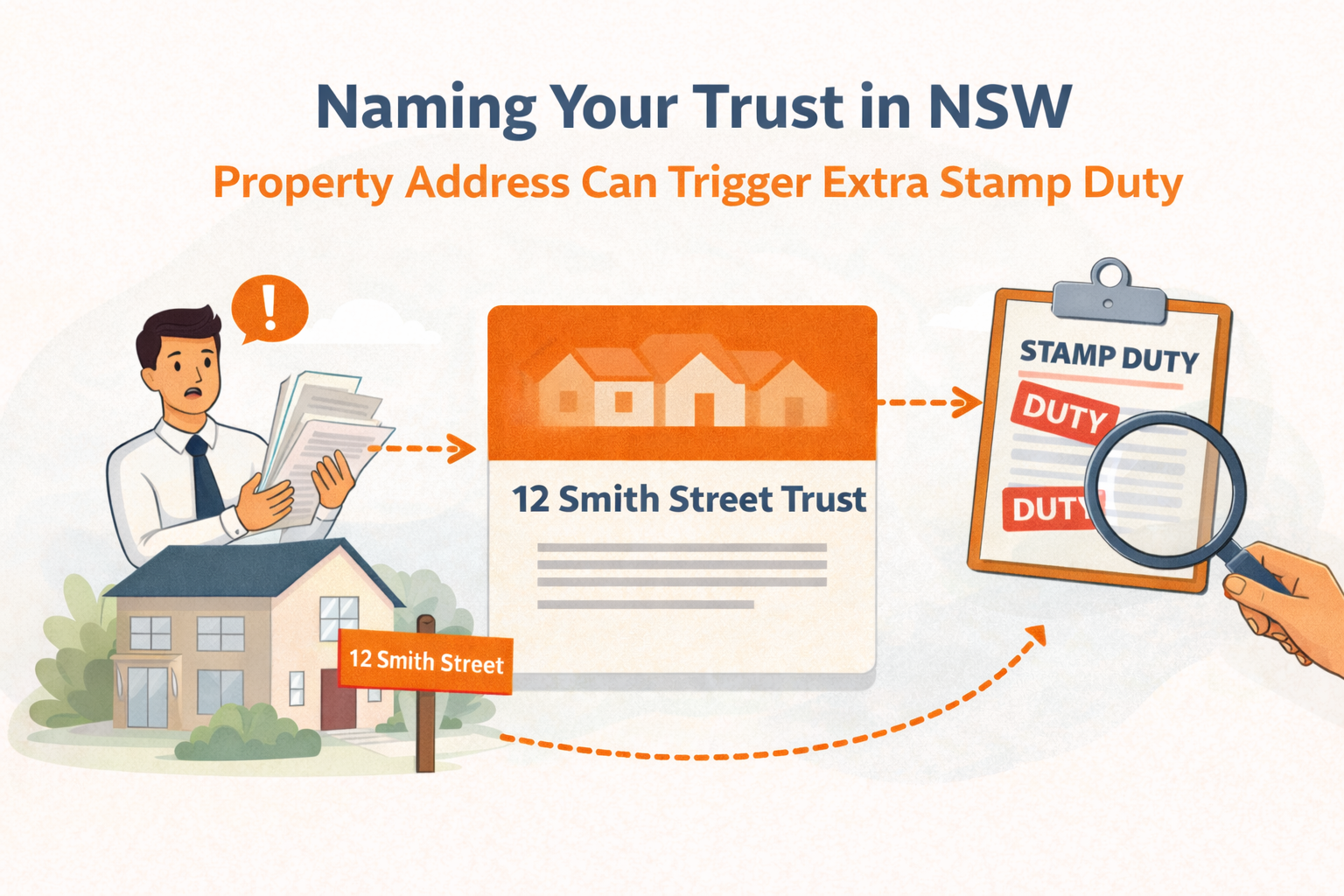
A Simple Naming Mistake Could Mean Paying Stamp Duty Twice
When you are setting up a trust to buy investment property, you are probably focused on the big stuff like choosing the right trust structure, appointing trustees, and deciding on beneficiaries.
But here's something most investors miss: what you name your trust and what you write in those early documents can quietly trigger a stamp duty nightmare in NSW (for now).
If your trust paperwork basically says "this trust exists for that specific property at 12 Smith Street," Revenue NSW might view this as creating or acknowledging a trust over an identified property. That means you could face stamp duty on the trust documents themselves, and then again when the property actually transfers.
Investors call this "double stamp duty." Revenue NSW calls it two separate taxable events, both triggered by how you documented the trust.
What Revenue NSW Is Really Looking For
Revenue NSW doesn't just assess stamp duty on property transfers. They also look at whether your documents create, declare, or acknowledge a trust over a specific property.
This is why your early paperwork is critical. If your documents point too clearly to one identified property, Revenue NSW may decide the trust arrangement itself attracts duty, even before settlement happens.
This issue gained attention after the Benidorm case, and NSW later tightened the rules around trust acknowledgements. The lesson is about keeping your trust setup clean from day one.
What Does "Identifying a Property" Actually Mean?
When lawyers talk about "identifying a property," they don't mean vague plans like "we want to buy an investment property someday."
They mean your documents connect the trust to a specific property in a way that leaves no doubt which asset you're talking about.
Obvious ways this happens:
- Naming your trust "12 Smith Street Trust".
- Including the property address in the trust name.
Other ways this happens:
- Trust deed schedules that reference the address.
- Trustee minutes mentioning the contract details.
- Settlement notes that say "this trust is settled to acquire 12 Smith Street".
- Including lot and DP numbers before the contract is signed.
- Email chains or file notes that document the specific property intention.
Even a casual email can become evidence if it shows the trust was always meant for that particular property.
The key point is that the more your paperwork reads like a trust over a specific property, the more you risk triggering duty.
How "Double Duty" Happens
Here's the typical scenario:
Step 1: You set up a trust specifically "to buy" 12 Smith Street. Your documentation clearly ties the trust to this property. Revenue NSW may argue this document itself is dutiable because it's a statement about a trust over an identified property.
Step 2: Later, the property transfers to the trustee. Normal transfer duty applies on the acquisition.
You feels like the same property got hit with stamp duty twice. But from Revenue NSW's perspective there are two separate duty events:
- The document that created/acknowledged the trust over the identified property.
- The actual property transfer.
This is why how you document the trust matters more than what you intended. Revenue NSW looks at what the documents say and imply at the time they are signed.
The Simple Rule That Keeps You Safe
If you're buying investment property in a trust in NSW, follow this straightforward approach:
Set up your trust generically, without tying it to any specific property.
What this means in practice:
- Settle the trust with a nominal amount (like $10).
- Choose a generic trust name (not "12 Smith Street Trust").
- Keep early documents property-neutral, i.e. don't mention specific addresses or property details before the contract is signed.
- Sign the contract correctly the first time in the trustee's name "as trustee for [Generic Trust Name]".
- Avoid extra documents that restate the trust over the specific property unless your solicitor confirms it's necessary and drafts it carefully
This approach keeps your trust establishment clean and your stamp duty liability clear.
The Critical Question to Ask Before Exchange
Before you sign that contract, pause and ask yourself:
"Do any documents, minutes, emails, schedules, or file notes say this trustee holds (or will hold) this specific property on trust?"
If the answer is yes, stop and get NSW stamp duty advice before you proceed.
Fixing documentation issues after the fact is difficult and potentially expensive. It's far easier to get it right from the start.
This Applies Beyond NSW Too
Even if you're not buying in NSW, this is still a smart practice to follow.
State revenue offices watch what happens in other jurisdictions. A documentation habit that creates a duty issue in one state can easily become an audit target in another.
The broader lesson is to keep trust establishment clean and generic, avoid property-specific naming, and tightly control any trust statements about specific properties.
Most stamp duty problems with trusts aren't caused by aggressive tax planning. They are caused by well-meaning investors trying to stay organised and accidentally creating a paper trail that changes their duty outcome.
Key Takeaways
- Never name your trust after a specific property address.
- Keep trust documents generic until after the property contract is signed.
- Be careful with emails, minutes, and file notes that reference specific properties.
- One documented connection between the trust and a specific property can trigger double duty.
- Get professional advice before you sign anything.
No spam, no sharing to third party. Only you and me.




Member discussion